Rabbit Springs, in southern Idaho, is one of those thunderegg localities that tends to be passed around by word of mouth among rockhounds rather than heavily advertised in guidebooks. The area produces rhyolite-hosted thundereggs with agate, chalcedony, opal, and occasional crystal-lined interiors. While not every egg is spectacular, Rabbit Springs has built a loyal following for one feature that makes it stand out: some specimens fluoresce impressively under UV light.
The Setting
Rabbit Springs sits in classic southern Idaho volcanic country — open desert, sagebrush, scattered lava rock, and broad dry hills shaped by ancient eruptions. It’s the kind of place where weather can shift quickly. Spring and fall are often the most comfortable times to collect, while summer can be brutally hot.
Getting there usually means driving rough dirt roads, so basic preparation matters. Water, decent tires, digging tools, and a willingness to spend the day in remote country are all part of the experience.
What You’ll Find
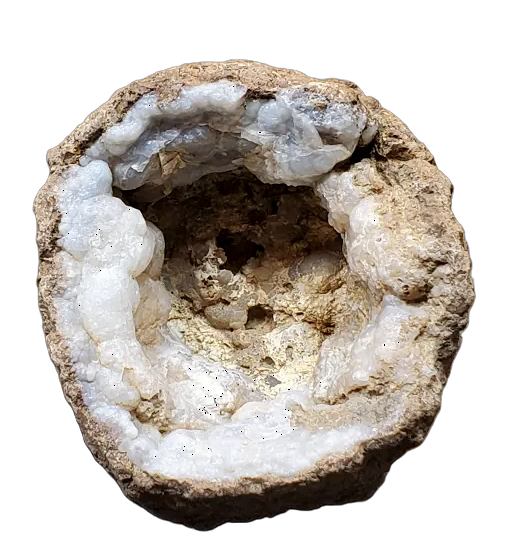
Like most thundereggs, Rabbit Springs material is often unremarkable on the outside. The eggs are typically rounded nodules with weathered volcanic shells that don’t reveal much until cut open. Sizes vary from small pocket-sized pieces to larger eggs worth hauling home.
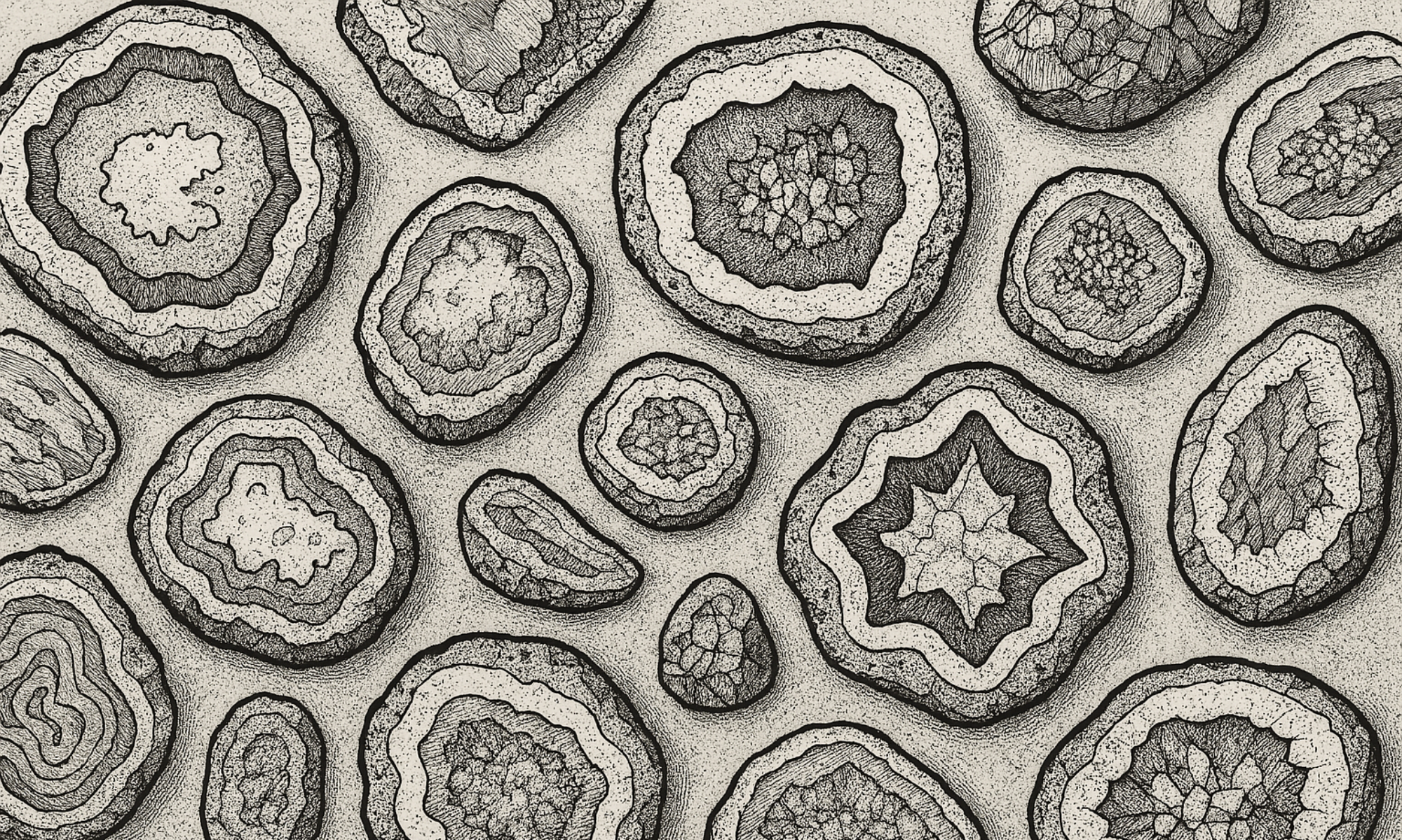
Inside, the variety is much better. Some are solid chalcedony or agate, others have crystal pockets, and some contain common opal or mixed silica fillings. Banding can be subtle or more defined depending on the specimen, and while plenty of eggs turn out to be duds, the better ones can be surprisingly attractive.
One of the more interesting traits of Rabbit Springs material is its fluorescence. Some eggs containing opal-rich or silica-rich material glow bright green under UV light, especially under shortwave UV. Others show only weak fluorescence, or none at all. That unpredictability adds another layer of interest — a specimen that looks fairly ordinary in daylight might become much more interesting under ultraviolet light.
The Collecting Experience
Collecting at Rabbit Springs usually involves a mix of surface hunting and digging. Weathered eggs sometimes erode loose and can be found scattered across slopes or washes, especially after weather has exposed fresh material. More serious collectors often dig into softer volcanic ground or work seams to reach less-weathered nodules.
It’s a fairly typical thunderegg experience: plenty of walking, turning over rocks, and carrying home a pile of promising material that may or may not be worth cutting later. Some days produce mostly average finds. Other days, one good egg makes the whole trip worthwhile.
And if you bring a UV light, there’s always the added curiosity of checking what you found after dark.
Why Collectors Like the Area
Part of Rabbit Springs’ appeal is that it still feels like a true collecting trip rather than a polished destination. There’s no guarantee of showpieces, no neatly sorted buckets waiting for you — just open volcanic country and the chance to find your own material.
The UV-reactive material gives the locality a little extra personality compared to many thunderegg spots. Even when the internal patterns are modest, fluorescence can make a specimen memorable.
Things to Keep in Mind
- Bring plenty of water: Southern Idaho desert conditions can be unforgiving.
- Expect rough roads: Vehicle prep helps.
- Bring a UV light if you have one: Some of the best surprises show up after dark.
- Check access and claims: Always make sure collecting is allowed where you plan to dig.
- Manage expectations: Not every egg will be impressive, inside or under UV.
Closing Thoughts
Rabbit Springs has the kind of appeal that keeps rockhounds interested — unpredictable thundereggs, quiet desert collecting, and the occasional specimen that surprises you twice: once when it’s cut open, and again when it lights up under ultraviolet light. It may not be the most famous thunderegg locality in the Northwest, but it has enough character to keep collectors coming back.