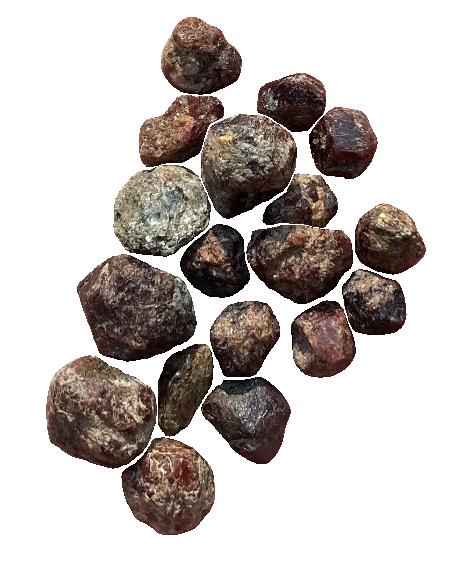
The Salmon River area of Idaho is known for producing small but deeply colored garnets that have attracted rockhounds for generations. These garnets are usually found in river gravels, bars, and weathered rock along parts of the Salmon River drainage. Most are dark red to reddish-purple, though some appear almost black until held in sunlight.
The Setting
The Salmon River cuts through steep canyons and rugged mountain country in central Idaho. Depending on the location, collecting can mean hiking riverbanks, searching gravel bars, or digging through decomposed rock on exposed slopes. The scenery is a big part of the experience — pine-covered hills, fast-moving water, and stretches of country that still feel remote.
Spring runoff can completely reshape gravel bars from year to year, sometimes exposing fresh material and sometimes burying old collecting spots. Many collectors prefer late summer or fall when water levels are lower and access is easier.
What You’ll Find
Most Salmon River garnets are almandine garnets, usually small crystals scattered through sand and gravel. They’re often rounded from river action, though sharper crystal faces can still be found in some areas. Sizes vary from tiny grains up to marble-sized pieces, with most falling somewhere in between.
The color is what stands out. Even rough stones with dusty surfaces can reveal a rich wine-red glow when cleaned and held to the light. Some are opaque, while better-quality pieces may show good translucence around the edges.
Collectors sometimes carry small screens or gold pans to separate garnets from river gravel. After a while, your eye starts catching the dark red flashes mixed among the black sands and stones.
The Collecting Experience
Searching for garnets along the Salmon River is slower and quieter than digging larger material like thundereggs or petrified wood. Instead of breaking rock all day, much of the process involves sorting through gravel, crouching near the water, and paying attention to subtle color differences.
Some days produce only a small handful of crystals, while other days turn up pockets where garnets seem to be everywhere. The fun comes from the steady hunt and the possibility of finding a particularly clean or well-formed crystal.
Kids often enjoy garnet hunting because the stones are easy to recognize once you know what to look for, and there’s always the excitement of spotting another red crystal in the dirt.
Why People Collect Them
For many rockhounds, Salmon River garnets are appealing because they’re simple and natural. They don’t need cutting or polishing to be interesting. A jar of dark red crystals collected from a riverbank carries its own kind of beauty.
Some people do facet the cleaner stones, though most local material is better suited for mineral specimens or keepsakes than jewelry-grade gems. Even so, a bright translucent garnet pulled from the gravel can still be surprisingly attractive.
Things to Keep in Mind
- Check access: Some river areas cross private land or protected ground.
- Watch river conditions: Water levels and currents can change quickly.
- Bring simple tools: Screens, small shovels, buckets, and gold pans work well.
- Take your time: Garnet hunting is more about patience and observation than heavy digging.
Closing Thoughts
Salmon River garnets are one of those classic Northwest collecting experiences that stays enjoyable because of their simplicity. There’s no guarantee of large finds or valuable gems, just the steady process of searching gravel beside a wild river and occasionally spotting that deep red flash among the stones. For many collectors, that’s reason enough to keep coming back.